🧩
Fragmented tools
Separate systems can make instructional planning, intervention, reporting, and family communication harder to coordinate.
Skhillz Learning System™ combines adaptive K–12 reading, writing, and math instruction with actionable student growth data, accessible learning supports, educator tools, and implementation guidance for public school districts and charter school networks.
Schools and districts need tools that help students learn, help educators respond, and help leaders understand where implementation and outcomes are moving in the right direction.
Separate systems can make instructional planning, intervention, reporting, and family communication harder to coordinate.
Leaders need to see where learners, classrooms, grades, and schools are progressing and where support is needed.
Teachers need actionable insights and usable tools, not another dashboard that creates additional work.
Districts need to understand adoption, training, utilization, integration health, and learner outcomes together.


A dashboard is only useful if the person holding it has ten minutes and a class arriving. What leadership sees at district level and what a teacher sees before first period are the same evidence, cut for the decision each of them is actually making.
See the teacher view
Every role sees the level of information and control appropriate to their work.
Move from district overview to school, grade, classroom, subgroup, and learner views based on role and authorization.
See an Executive DashboardAdoption and growth roll up so a superintendent can see the system. They also roll back down, so a principal can find the eleven learners inside a number and do something about them this week.

Skhillz turns learning evidence into clearer instructional priorities while keeping teachers in control.
Classroom dashboards, learner profiles, assignments, progress monitoring, lesson planning, and family communication.
Suggested instructional groups based on shared skill needs, misconceptions, current evidence, and teacher preferences.
Progress checkpoints, prerequisite recommendations, intervention planning, and clearer visibility into response to support.
Generate and customize passages, prompts, activities, rubrics, lesson supports, and differentiated assignments.
Translate complex learning data into understandable progress updates, recommendations, achievements, and next steps.
District, school, classroom, specialist, family, and learner access designed around the responsibilities of each role.
The same learner profile has to work in a whole-class lesson, a pull-out group and a one-to-one session.

Every learner on the same objective, with the supports each one needs already on.
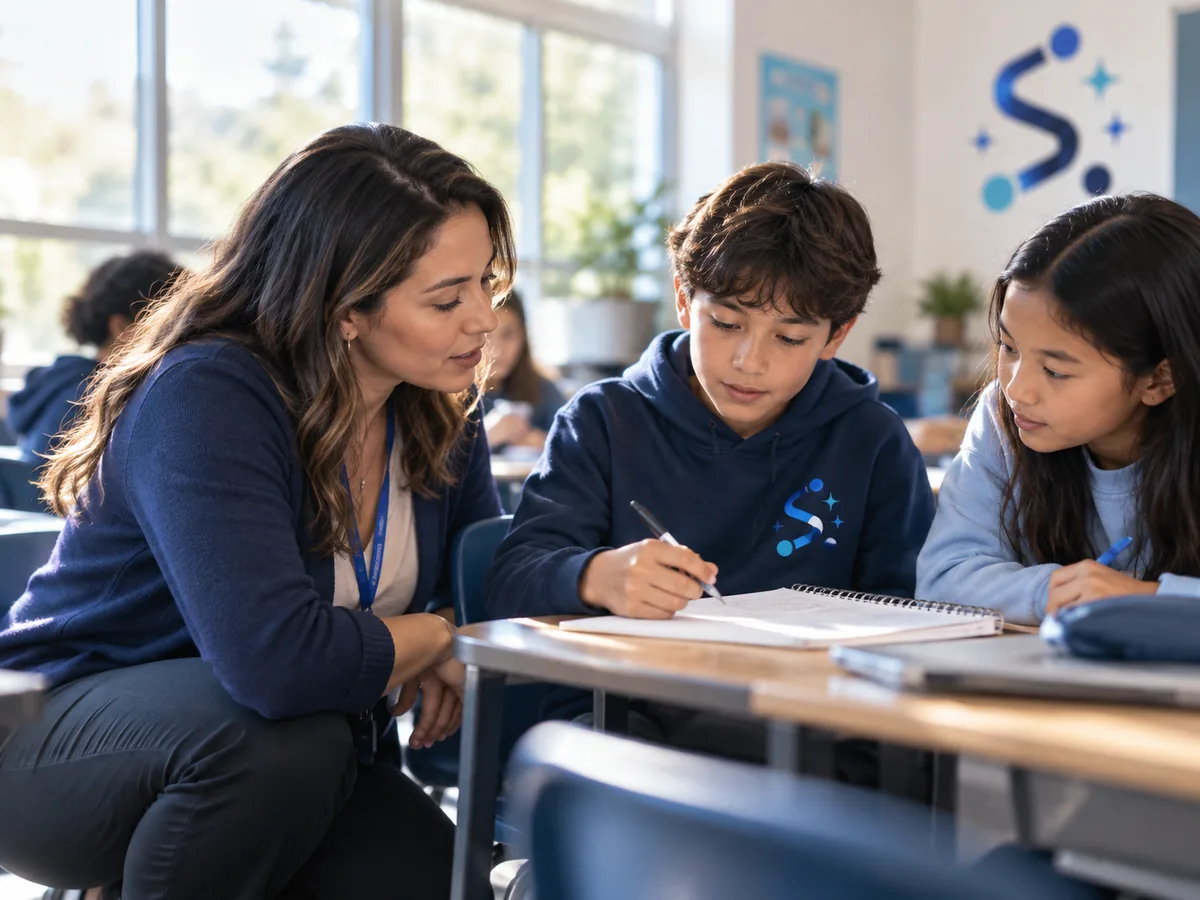
Groups formed from the blocking skill, updating as learners move.

The full evidence trail for the conversation with a specialist or a family.
Skhillz includes structured onboarding, training, integration support, readiness milestones, customer-success guidance, and adoption monitoring.
Discuss ImplementationClarify goals, learner populations, schools, roles, timeline, reporting needs, and integration requirements.
Set up organizations, licenses, users, SSO, roster pathways, integrations, permissions, and implementation cohorts.
Prepare leaders, educators, support staff, families, and learners with role-specific guidance and launch resources.
Review adoption, learning activity, support needs, integration health, training progress, and implementation milestones.
Final availability and certification will vary by connector, district requirements, and implementation phase.
Skhillz is being engineered with role-based access, tenant isolation, auditability, accessibility, privacy workflows, and operational controls appropriate for educational use.
Explore the Trust CenterAuthorization, auditability, data access rules, export workflows, and institution-specific privacy practices.
Parent and institution-controlled access, consent workflows, age-aware learner experiences, and limited data exposure.
Blue word tracking, reading ruler, focus mode, contrast options, reduced motion, keyboard support, and responsive layouts.
Monitoring, release controls, incident response, backup planning, integration health, and service-level objectives.

Districts and charter networks buy through boards, and boards ask about data agreements, authorization, auditability and what happens when a family requests their child's record. Those answers exist in writing before the conversation starts.
Turn learner evidence into clearer daily instructional decisions.
Understand implementation, engagement, growth, and support needs.
Connect strategy, implementation, utilization, and student outcomes.
Implementation planning, training completion and adoption are tracked as part of the work, not reported on at the end of the year when it is too late to change anything.
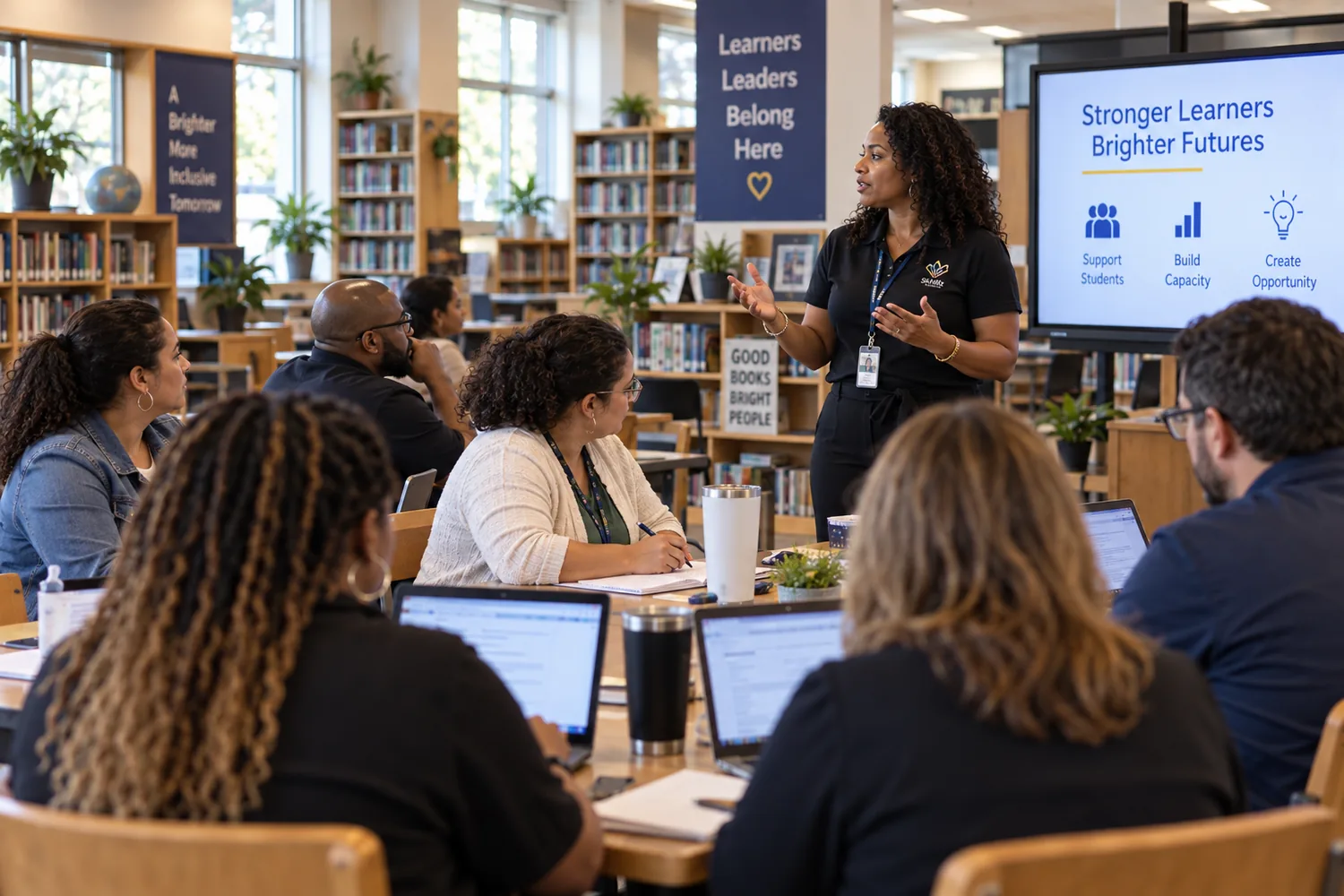
Explore implementation, data, accessibility, licensing, integrations, instructional use, and support.
Ask another questionTell us about your learner population, instructional priorities, implementation model, technology environment, integrations, reporting needs, and desired timeline.